
THE LESSER LITANIES
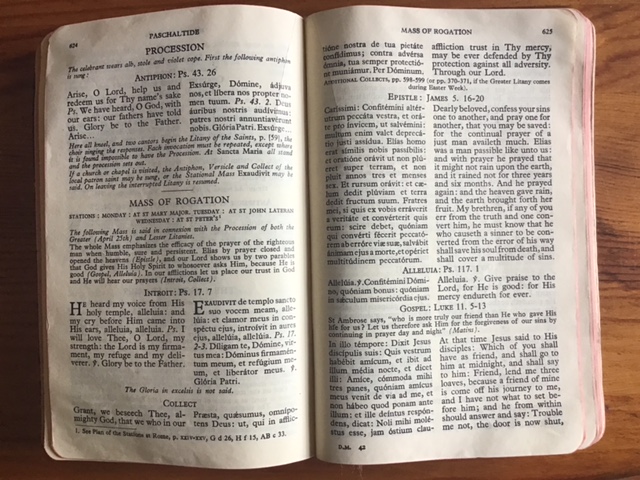
Rogation Monday is a greater ferial day, the others ordinary ferial days.
In consequence of the public calamities that afflicted the diocese of Vienne in Dauphiny in the fifth century, St Mamertus instituted a solemn penitential procession on the Monday, Luesday and wednesday octote Ascension Day. Under an order of the Council of Orleans in 511 the devotion spread to the rest of France. In 816 Pope Leo III introduced it in Rome and soon after it became a general observance throughout the Church.
The Litany of the Saints and the Psalms and Prayers sung in procession on these days are supplications ; hence the term Rogations applied to them. The object of these devotions is to appease the anger of God and avert the scourges of His justice; secondarily, to draw down the blessings of God on the fruits of the earth.
Violet is used as a token of penance, and the Paschal candle is left un-lighted. The singing of the Litany gave its name to these three days of public prayers; but as there was already a similar procession at Rome, April 25, the Rogations were called the Lesser Litanies. The Litany of the Saints, consisting of ciaculations in the form of a dialogue, is an admirable manner of prayer which it should be our purpose to cultivate.
 A.D. Press